
CSA releases Matter 1.4
The Connectivity Standards Alliance (CSA) is where industry professionals across the globe come together to pave the way to a world of seamless interaction that is transforming the way we live, work, and play. As part of their mandate and vision to create the standards, tools and platforms to connect the world, Matter 1.4 has been released.
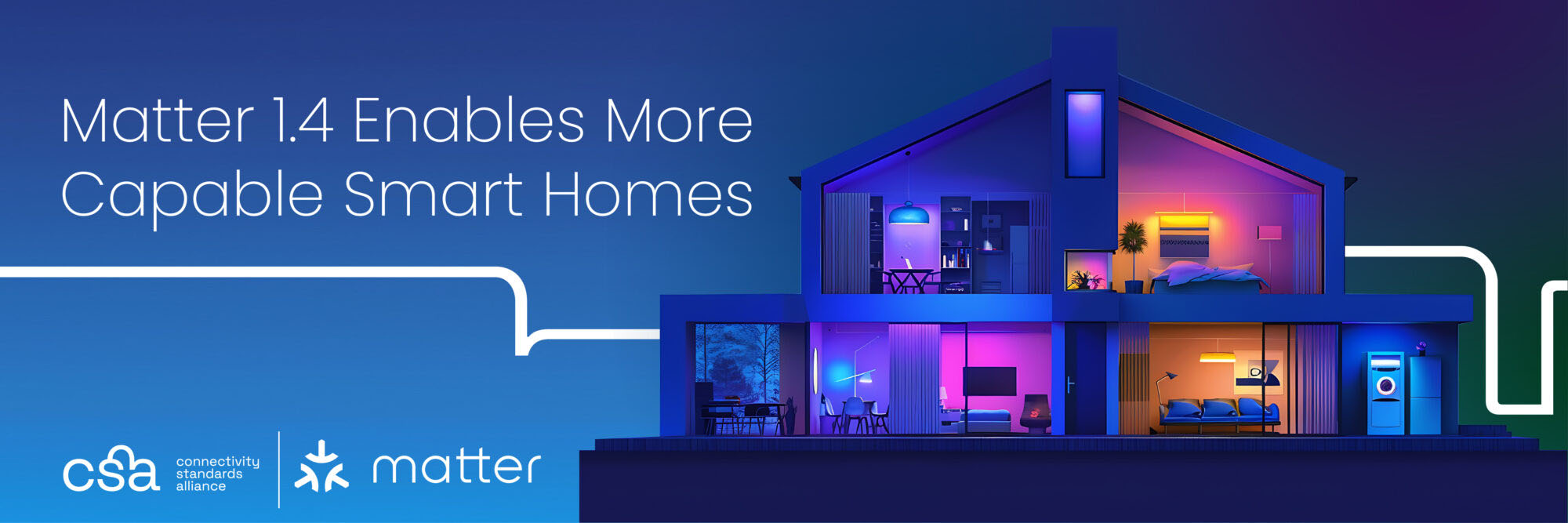
For decades, technologists and standards fora around the world have been trying to come up with the one, ubiquitous protocol that could be used for secure, reliable connectivity to all those things with a digital presence. Indeed, some of us Nisient folks in a past life were front and centre on groundbreaking work within the IEEE although until recently, these lofty goals of having everything talk a common language have evaded the industry.
Welcome to the playing field, the Connectivity Standards Alliance. In their own words: "Our wide-ranging global membership is on a mission. That mission is to ignite creativity and collaboration in the Internet of Things, by developing, evolving, and promoting universal open standards that enable all objects to securely connect and interact. We believe all objects can work together to enhance the way we live, work, and play". The CSA has taken a fresh look at the problem with all the available and emerging technologies at their disposal, with the Matter protocol and associated processes providing what may just was the first incarnation of a truely ubiquitous protocol for seamless and reliable end device communications. Along with the specifications, a full software SDK and established certification processes have been developed that have allowed it to be adopted by most of the largest technology manufacturers and ecosystem players.
Whilst the standards are continually being updated and enhanced to support new device types and applications, the recent release of version 1.4 is of major significance. The goal of Matter is to allow the user to mix and match the best devices for their application regardless of which manufacturer they come from. Early implementations still retained some of the isolation between vendors and true manufacturer independence was not achieved, as you were required to buy products that were approved in your ecosystem of choice. This new version now overcomes much of these isolated islands and allows devices to synchronise across ecosystems, as well as assisting Matter support to be made available in other on premise networking equipment such as routers and gateways.
Of keen interest in Matter 1.4 is the definition and inclusion of new energy device types and capabilities, including:
- Solar Power, with support for inverters and panel arrays
- Batteries, including wall storage units and Battery Energy Storage Systems (BESS)
- Heat Pumps and Water Heaters, managing consumption and forecasting for energy efficiency
- Thermostat enhancements, adding sophisticated scheduling and control
These capabilities make it possible for advanced control solutions that can base real time actions upon power supply and demand, environmental and weather conditions, occupancy, and equipment performance. It has been a very, very long time coming, but this may just herald the premise wide intelligent control systems our digitally connected world facilitates.